Over the past century, human life expectancy has increased dramatically. We are living longer than any generation before us.
But while lifespan has increased, healthspan has not kept pace.
Many people notice something subtle beginning in their late 30s and early 40s:
Recovery slows.
Inflammation lingers longer.
Energy dips.
Joint stiffness increases.
Small injuries take longer to heal.
This is not random.
It is biological.
The Repair System You Were Born With
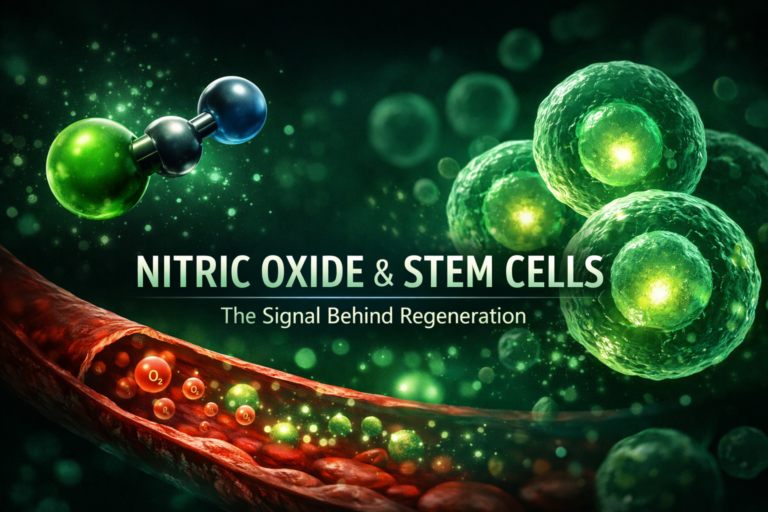
Your body is equipped with an internal repair system: stem cells.
Adult stem cells circulate through your bloodstream and reside in various tissues. Their primary job is simple but powerful:
• Replace damaged cells
• Repair tissues
• Respond to inflammation
• Maintain organ integrity
• Support resilience under stress
When you are younger, stem cell activity is robust. Injury triggers release. Repair happens efficiently. Inflammation resolves quickly.
Your body communicates clearly.
What Changes After 40?
Research suggests that circulating stem cell numbers decline with age. But the issue is not only quantity.
It is signaling.
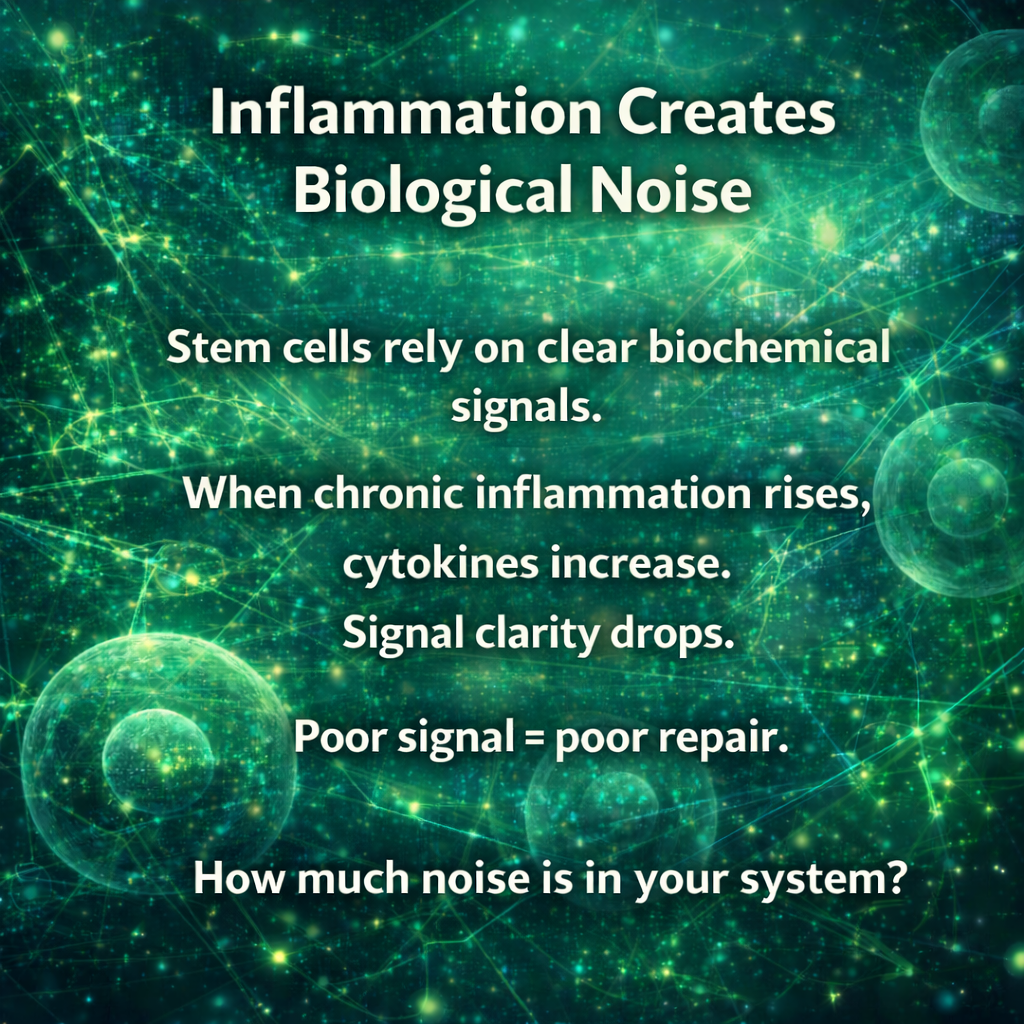
Stem cells rely on biochemical signals in the bloodstream to identify where repair is needed. These signals must be clear and precise.
As we age:
• Chronic inflammation increases
• Cytokine levels rise
• Oxidative stress accumulates
• Heavy metals and toxins interfere
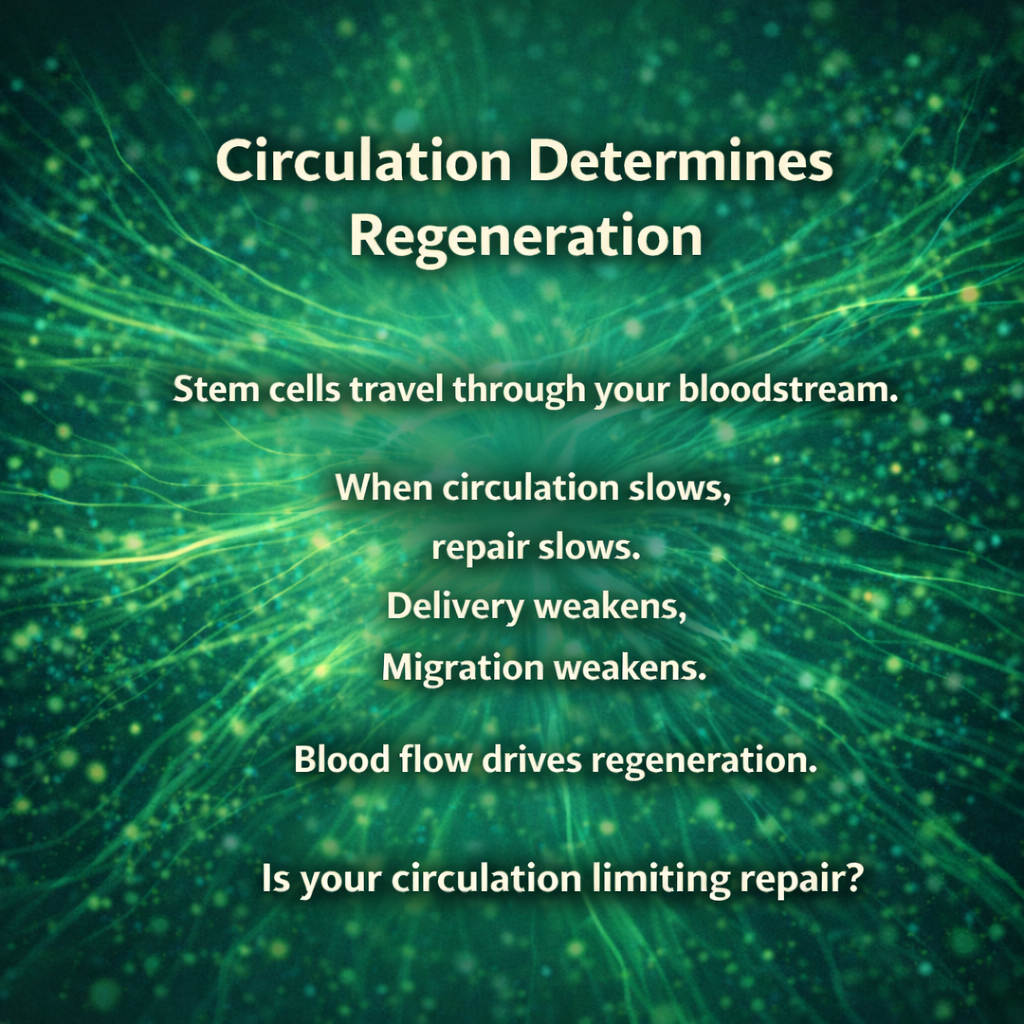
• Circulation efficiency declines
This creates what some researchers describe as “biological noise.”
When the signal-to-noise ratio drops, repair efficiency drops.
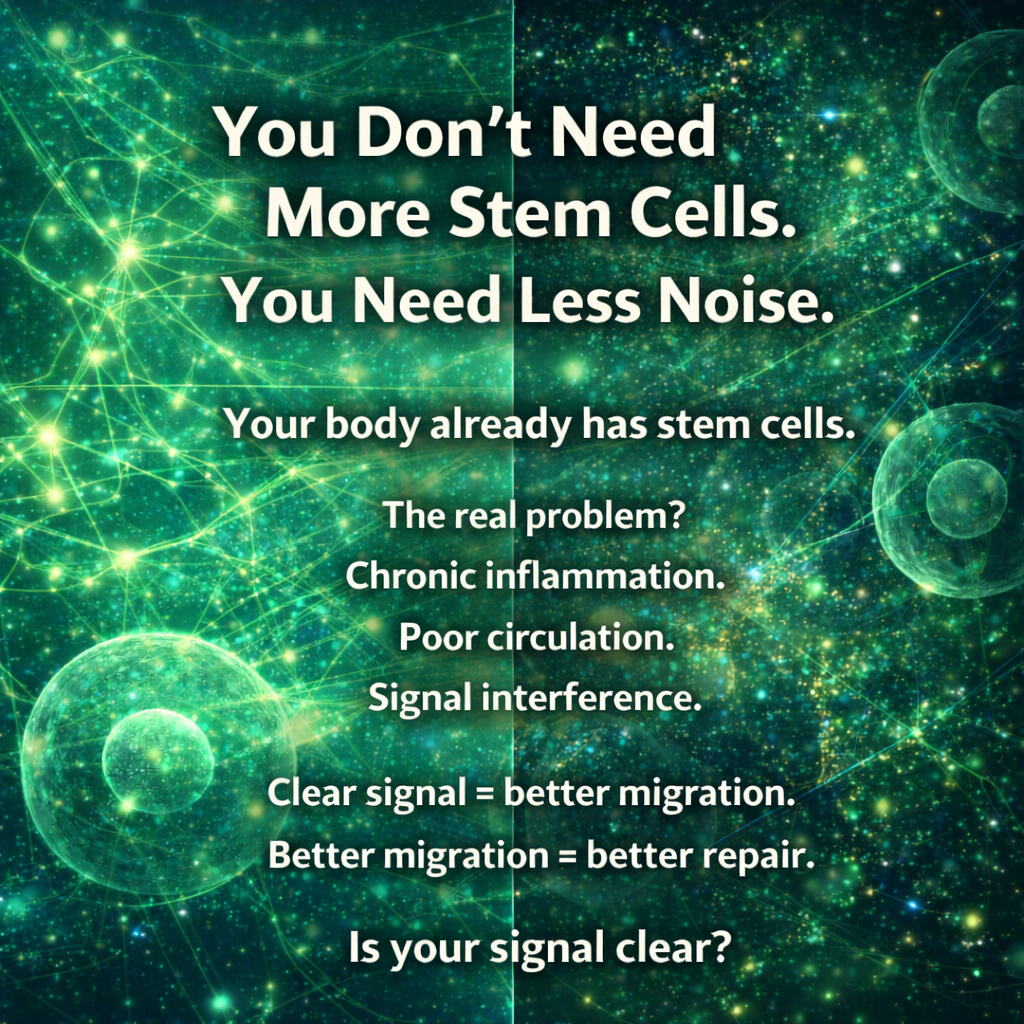
The stem cells may still exist — but they struggle to navigate effectively.
Aging Is a Communication Problem
Most people think aging is simply wear and tear.
But a deeper perspective suggests aging is largely a decline in regenerative communication.
The body becomes less efficient at:
• Detecting damage
• Mobilizing repair cells
• Delivering nutrients
• Resolving inflammation
This is why recovery slows before visible disease appears.
Longevity, then, is not just about living longer.
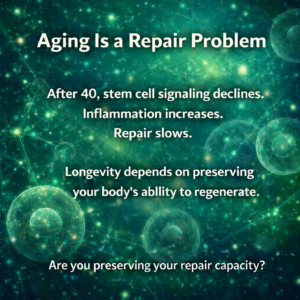
It is about preserving repair capacity.
What Supports Stem Cell Function?
The goal is not to add foreign cells.
The goal is to improve internal conditions.
Support strategies include:
• Reducing chronic inflammation
• Improving nitric oxide production for circulation
• Supporting gut health to lower cytokine load
• Detoxifying heavy metals
• Restoring mineral balance
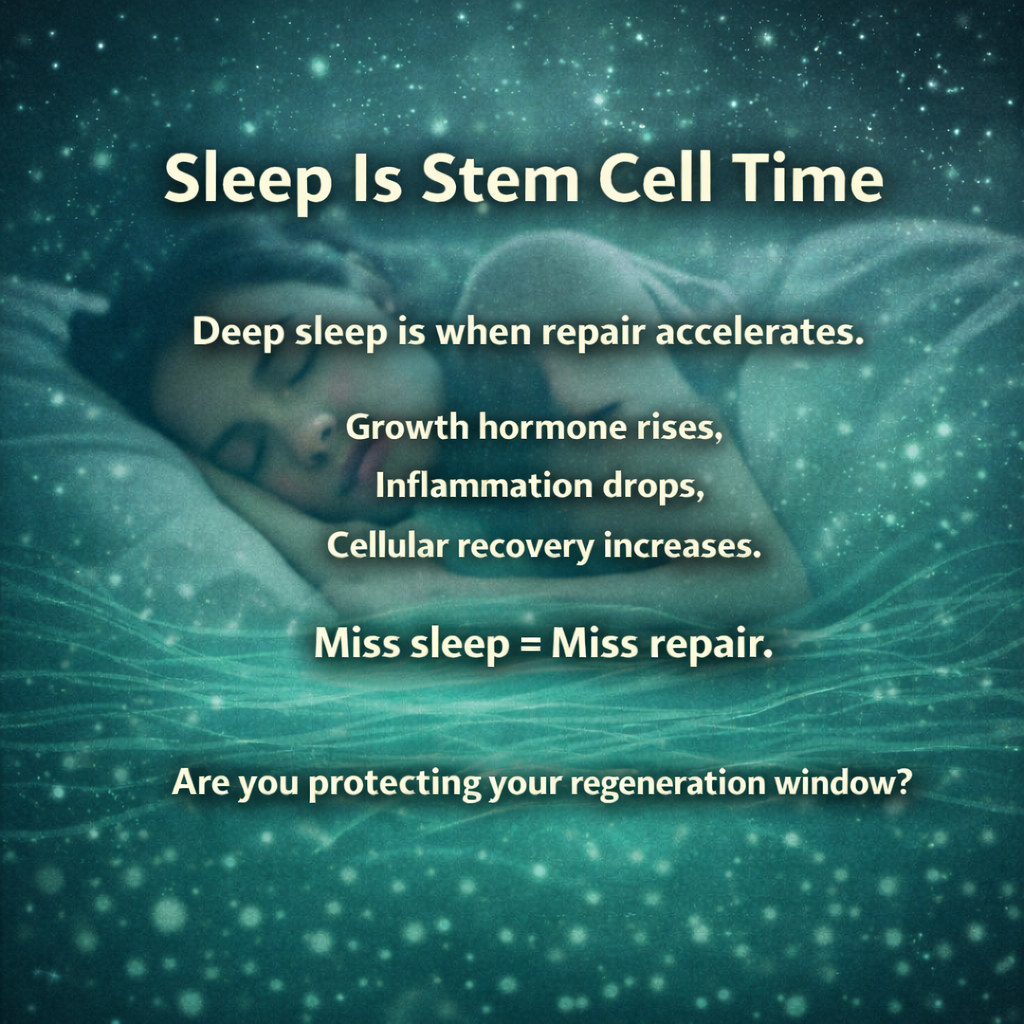
• Optimizing sleep cycles
When inflammation decreases and circulation improves, signaling becomes clearer.
Clear signal = better repair.
Better repair = healthier aging.
The Real Longevity Question
Instead of asking:
“How do I stop aging?”
A better question is:
“How do I preserve my body’s ability to repair itself?”
Because once repair declines, degeneration accelerates.
But when repair improves, resilience returns.
After 40, repair slows down.
But decline is not destiny.
The body still wants to heal.
It just needs clearer signals.