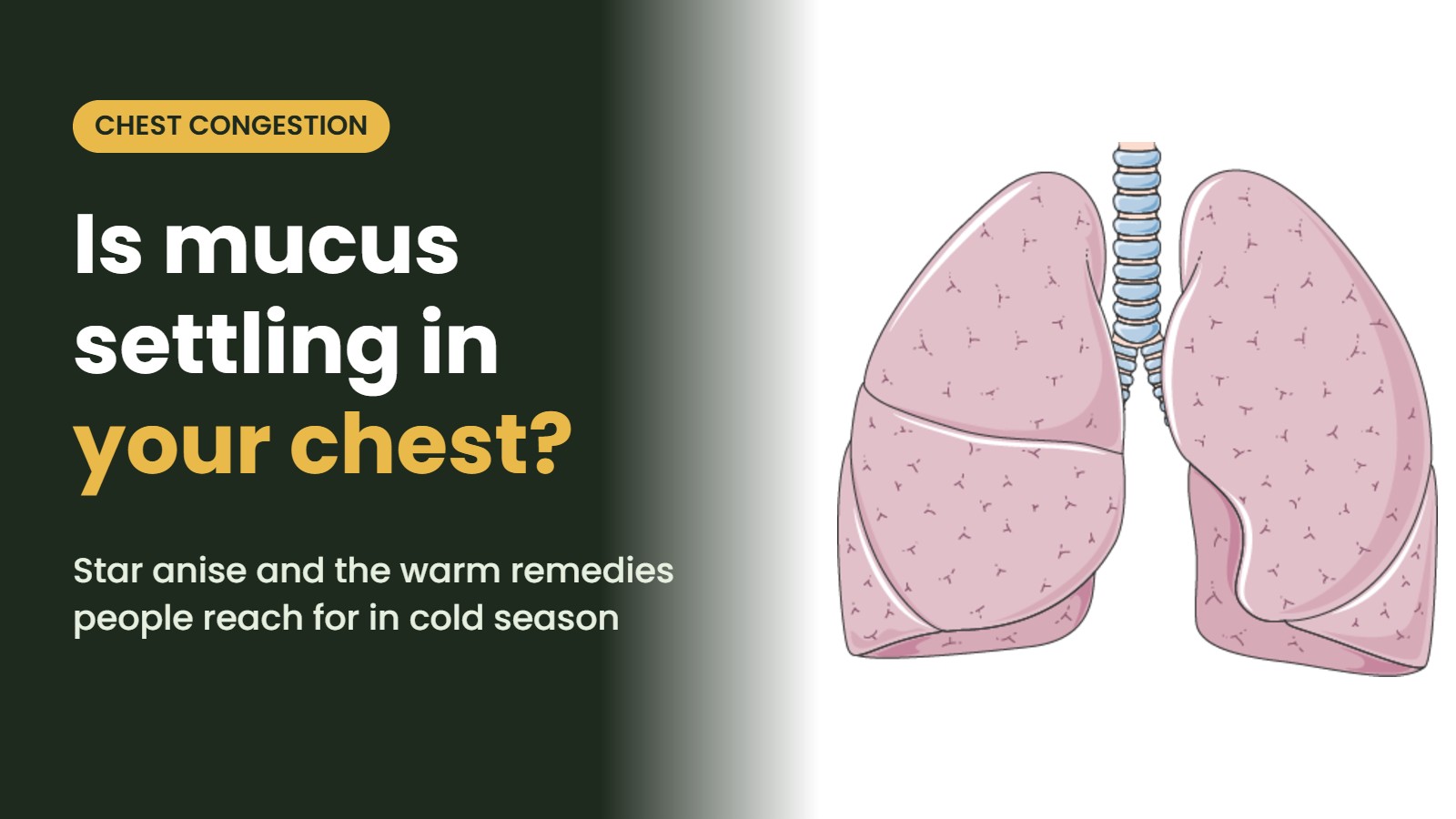
That heavy, rattly feeling in your chest has a way of hanging around long after the cold itself has packed up and left.
So it’s no surprise a little star-shaped spice is making the rounds online as one of the natural remedies for chest congestion. A cup of star anise water, people say, warms you up and helps loosen what’s sitting in there.
Here’s what’s behind the trend, how people make it, the one buying rule that really matters with star anise, and the other warm helpers people keep beside it. For the bigger picture, see our natural remedies for chest congestion and lung support on the Lung & Breathing page.
Quick take
- Star anise has a long traditional history for coughs, colds and digestion, and a warm cup of it is a comforting cold-season ritual.
- Buy Chinese star anise (Illicium verum) sold as a food spice. Its look-alike, Japanese star anise, is toxic, and star anise tea is never for babies or young children.
- Steam, fluids, rest, mullein, ginger and thyme are the usual company; know the signs that mean it’s time to see a doctor.
Why mucus settles in when the weather turns
Mucus isn’t the enemy. Your airways make it every day to trap dust and germs and sweep them out. When a cold or flu moves in, the lining gets irritated and makes more, and it gets thicker, so you notice it.
The things that usually bring people looking for help:
- A chest cold that’s gone, except for the cough and the rattle
- Post-nasal drip that keeps you clearing your throat, especially at night
- Dry, heated indoor air that leaves everything feeling thick and stuck
- That first-thing-in-the-morning cough to bring something up
For most people it’s the tail end of a common cold, and it eases on its own over a week or two. A cough after a chest cold can linger up to about three weeks, per the US CDC. Warm drinks, moist air and rest are what people lean on in the meantime.
Star anise: the spice behind the trend
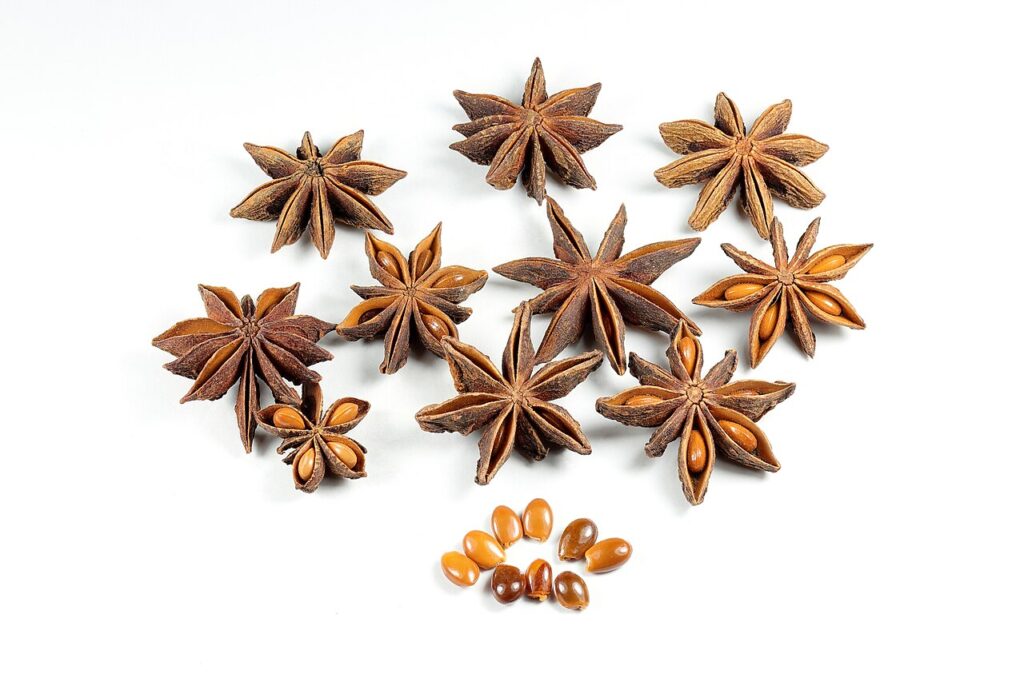
Star anise is the dried, eight-pointed fruit of an evergreen tree native to southern China and Vietnam. You’ll know its sweet, licorice-like taste from Chinese five-spice, braised dishes and a good bowl of pho.
In traditional Chinese medicine it’s thought of as a warming herb, traditionally used for coughs and colds with chills, and for a cold, crampy stomach.
Its main aromatic compound, anethole, is the same one found in anise and fennel, and it’s being studied for its effects on the airways and digestion. Star anise is also rich in shikimic acid, the raw material drug makers use to build a well-known antiviral flu medicine, though that says nothing about what a cup of tea does.
Modern research on star anise tea itself is thin. What it has is centuries of use and a warm, fragrant cup that makes slowing down feel good.
How people make star anise water
- Drop 1 to 2 whole pods into a mug of just-boiled water.
- Cover and steep 10 minutes, then strain.
- Some add a few slices of fresh ginger, a cinnamon stick or a squeeze of lemon.
- Once it’s cooled to sipping warm, adults and kids over 12 months can stir in a little honey (never for babies under 1).
US note: the FDA doesn’t approve herbal products or set doses for them, so there’s no US standard amount for star anise tea. The amounts above are typical kitchen amounts, not a medical dose; check with your doctor first if you take medicines or have a health condition.
The one star anise rule: buy the right star
This is the part worth reading twice. Chinese star anise has a close look-alike, Japanese star anise (Illicium anisatum), which is toxic. It can cause vomiting, jitteriness and seizures, and the two are hard to tell apart once dried and broken.
In 2003 the US FDA advised people not to drink teas brewed from star anise after reports of illness, including in infants, linked to teas that may have contained Japanese star anise. In 2004 Health Canada told Canadians to avoid star anise teas and products unless they’re clearly identified as Chinese star anise.
- Buy whole Chinese star anise (Illicium verum) sold as a food spice, from a grocer or spice company you trust.
- Skip loose “herbal” star anise of unknown origin, and decorative pods from craft or potpourri shops.
- Keep to a cup or two; more isn’t better.
- Never give star anise tea to babies or young children, including for colic.
Steam, sips and rest do the quiet work. The spice just makes the ritual something you look forward to.
Natural remedies for chest congestion people pair with it
Steam
The oldest trick in the book. A hot shower, or a bowl of hot (not boiling) water with a towel over your head for a few minutes, gives the airways warm, moist air, and many people find it loosens things up. Keep your face a safe distance away, and skip the towel tent with young children because of the burn risk; a steamy bathroom works for them instead.
Mullein
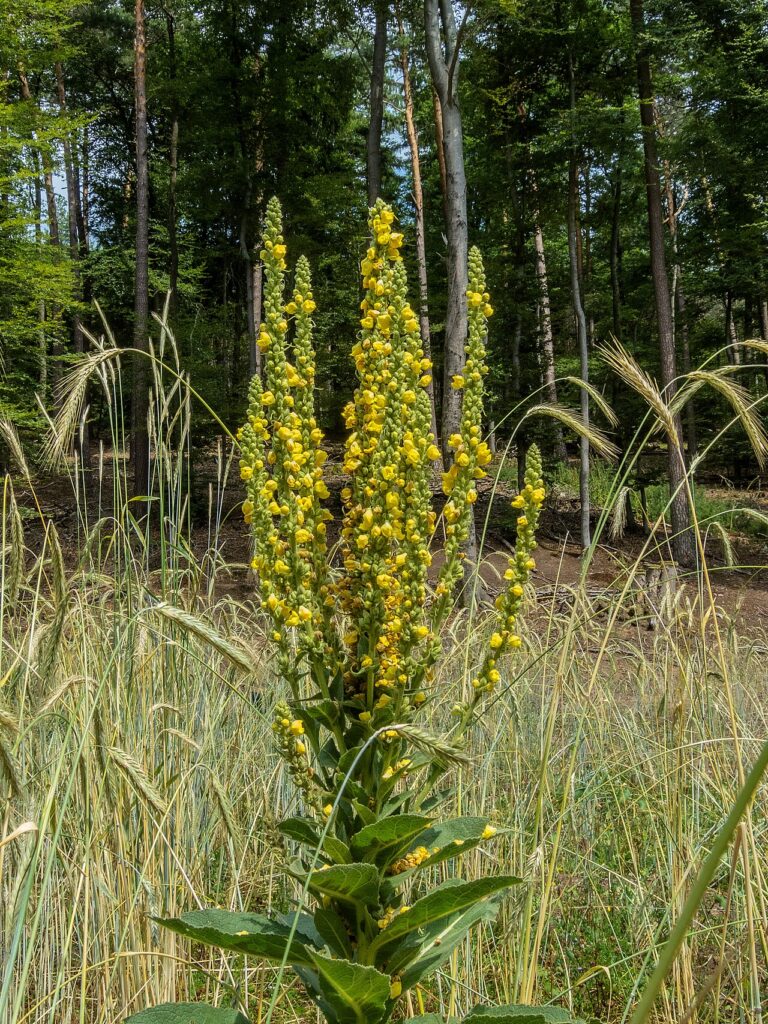
Mullein’s soft, fuzzy leaves are one of the best-known traditional lung herbs in Western herbalism, used in teas for coughs and congestion. Studies in people are few. If you make the tea, strain it through a coffee filter or fine cloth, because the tiny leaf hairs can tickle the throat. We dig into mullein and other lung herbs in Breathe easier: natural ways people support their lungs.
Ginger, thyme and the kitchen warmers
Ginger
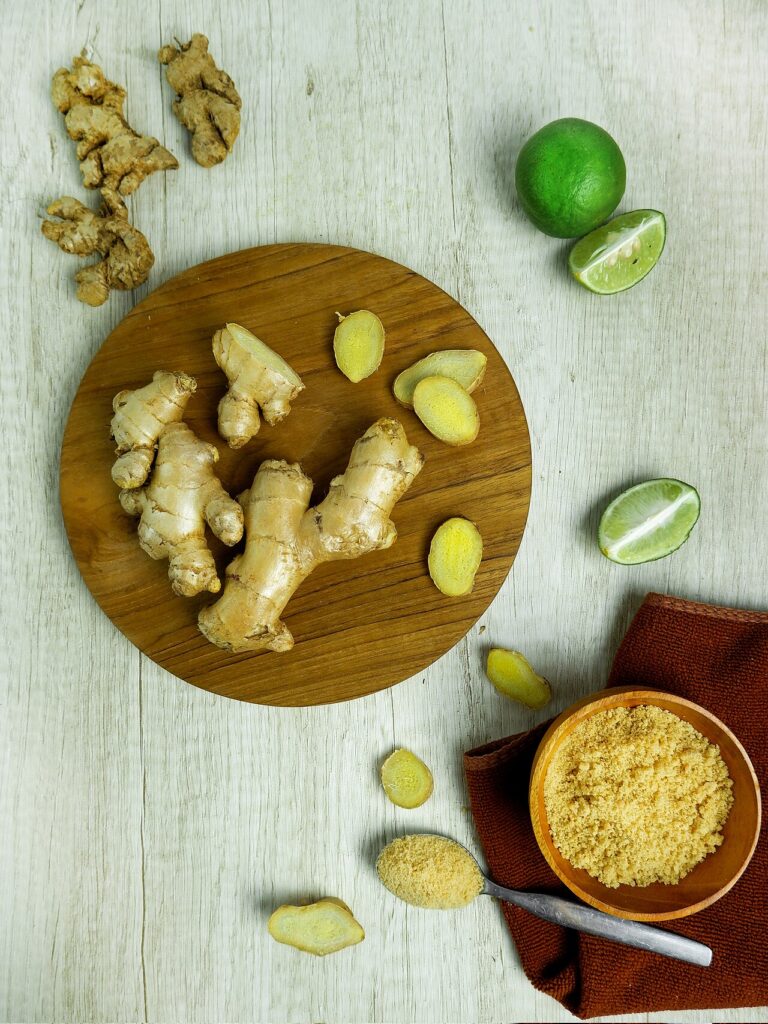
Fresh ginger simmered into a tea is a warming staple in many traditions for colds and chills. It pairs beautifully with star anise. People on blood thinners, or with gallstones, should check with their doctor before drinking lots of it.
Thyme
Thyme is traditionally used for coughs with mucus, and in Europe thyme preparations are recognised as traditional herbal medicines for that kind of cough. A teaspoon of dried thyme steeped in hot water is the simplest form.
Honey for a night-time cough, and the full list of cough warning signs, are covered in our salt-steamed orange cough remedy post. For the foods and habits people use to stay well through the season, see immune support through the seasons.
Some people also keep elderberry on hand once cold season arrives. It’s traditionally used for colds and flu; the NIH’s NCCIH describes the research as small and mixed.
Also available: elderberry capsules
Elderberry capsules for cold season, sold by an outside company. Check the label, and ask your doctor first if you’re pregnant, have an autoimmune condition or take medicines that affect your immune system.
Sponsored link. If you buy through it, Clif may earn a commission at no extra cost to you. The claims on the seller’s page are theirs, not ours, and haven’t been checked by us. It’s not a substitute for seeing your doctor.
Who should skip star anise tea
- Babies and young children: never (see the safety rule above)
- Pregnancy and breastfeeding: there isn’t enough safety information, so skip it
- Anyone who’s reacted to anise, fennel or star anise before
- People with a seizure disorder, given the look-alike risk
- If you take regular medicines or have a liver condition, ask your doctor or pharmacist first
When to see a doctor
Congestion is usually just the tail of a cold. Get checked if you have:
- Trouble breathing, wheezing, or chest pain (call 911, US and Canada, if it’s severe)
- A fever of 100.4°F (38°C) or higher, or a fever that comes back
- Symptoms lasting more than 10 days, or a cough after a chest cold lasting over 3 weeks
- Yellow or green mucus with pain or pressure around your eyes, cheeks or forehead
- Any blood in what you cough up
- A baby, an older adult, or anyone with asthma, COPD, heart disease or a weak immune system who’s getting worse
Questions people ask
What is the best natural remedy for chest congestion?
There isn’t one winner. The habits people rely on most are steam, plenty of warm fluids (water, broth, caffeine-free tea), rest and a cool-mist humidifier, with herbal teas such as thyme, ginger, mullein or star anise as comforting extras. If it’s not easing after 10 days, see a doctor.
Is star anise tea safe to drink?
For most adults, a cup made from Chinese star anise sold as a food spice is a common kitchen drink. The risk comes from mix-ups with toxic Japanese star anise, which is why the FDA and Health Canada have warned about star anise teas. Never give it to babies or young children.
How long does chest congestion last?
Most cold-related congestion eases within a week or two. A cough after a chest cold can hang on for up to three weeks; anything longer, or any of the warning signs above, is worth a visit.
Try this today
Check the label on the star anise in your cupboard. If it says Illicium verum or Chinese star anise and it’s a food spice, steep one pod with three slices of fresh ginger for 10 minutes, then sip it slowly in a steamy bathroom after a hot shower.
Go deeper in the Vault
Start with the free Lung & Breathing page for natural remedies for chest congestion and everyday lung support. Members can open everything in the Vault on lungs and breathing, including the herb profiles and the full step-by-step protocol. See what’s inside the Vault.
Educational only, not medical advice. This information has not been evaluated by the FDA or Health Canada and is not intended to diagnose, treat, cure, or prevent any disease. Talk to your healthcare provider before starting any remedy, supplement, or detox, especially if you are pregnant, nursing, taking medication, or managing a health condition. Read our full Medical Disclaimer.