
It’s 2 a.m., your throat feels like sandpaper, and the cough just won’t settle. Your grandmother might have reached for an orange.
Not a glass of juice. A whole orange, sprinkled with salt and steamed until the peel goes soft. In Chinese homes it’s called yán zhēng chéng (盐蒸橙子), salt-steamed orange, and it has been passed down for generations as a gentle comfort for a tickly cough.
Here’s where the habit comes from, how people make it, what it may offer, and the signs that mean it’s time to call a doctor instead.
Quick take
- Salt-steamed orange is a Chinese folk remedy: a whole orange, a pinch of salt, about 15 minutes of steam, eaten warm.
- It’s traditionally used for a dry, tickly or lingering cough. No one has studied the steamed orange itself, but the warm, soothing ritual is easy to try.
- Honey has the best home-remedy research for night-time cough (never for babies under 1). Go easy on the salt if you watch your blood pressure.
Why people reach for it
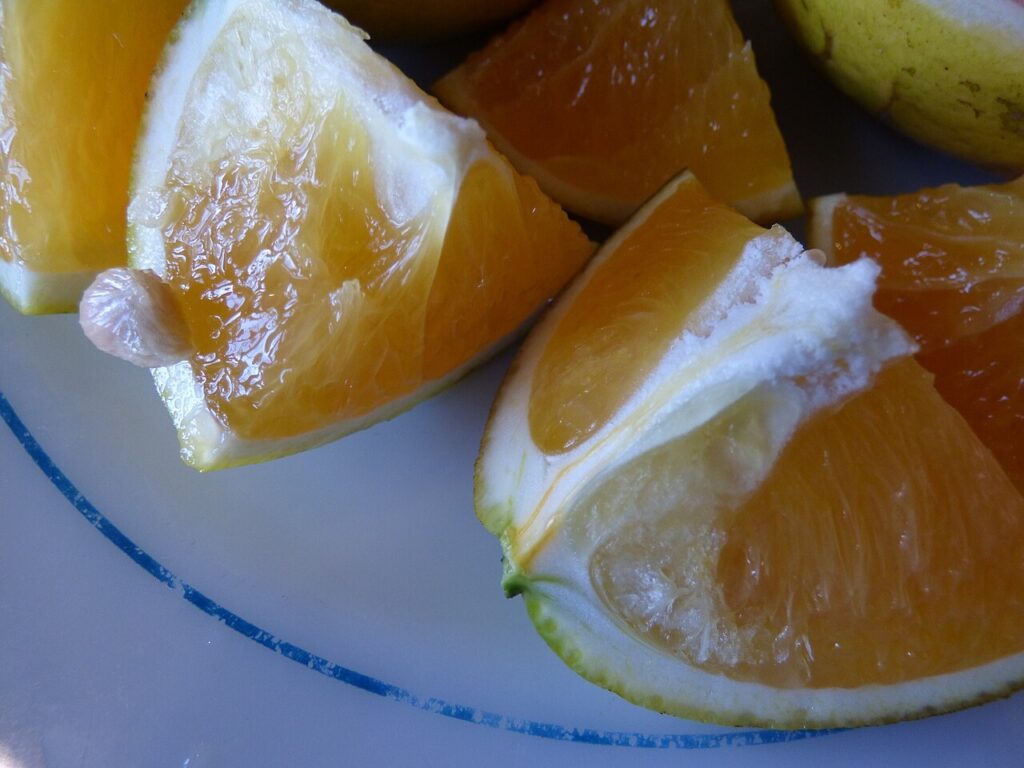
Most people find this remedy when a cough is wearing them down. The usual situations:
- The tickly night cough that starts the moment your head hits the pillow.
- A raw, scratchy throat at the tail end of a cold.
- The cough that lingers for a week or two after the rest of the cold has gone.
- Dry indoor air once the heating comes on in fall and winter.
- Post-nasal drip, that tickle at the back of the throat.
- Wanting something warm, simple and food-based before reaching for a bottle of syrup.
Where the habit comes from
In traditional Chinese food therapy, raw oranges are thought of as cooling, and some families believe they can add to phlegm when you’re already unwell. Steaming the fruit is said to “warm” it, and the pinch of salt is said to help the remedy settle a cough and moisten the throat.
There’s also a practical side. As the orange steams, the peel softens and its fragrant oils seep into the warm flesh and juice. You end up eating a little of the peel’s goodness along with the fruit. That matters, because in Chinese tradition the peel is the part with the long history.
How people make salt-steamed orange
This is the method most families use. Typical amounts below are one orange and a small pinch of salt; check with your doctor first if you’re watching your salt or sugar.
- Wash a sweet orange well (a navel orange works), since you’ll be steaming it in its peel.
- Slice off the top third like a lid.
- Poke 5 or 6 holes into the flesh with a chopstick or skewer.
- Sprinkle a small pinch of salt over the holes (about ⅛ teaspoon or less).
- Put the lid back on, set the orange in a small heatproof bowl, and steam it for about 15 minutes, until the peel turns soft and the juice collects in the bowl.
- Let it cool until it’s warm, not hot. Scoop out the flesh and drink the juice from the bowl.
People usually have one in the evening, sometimes twice a day, for a few days while the cough lasts. Some eat a little of the softened peel too. No steamer? A covered pot with a rack and an inch of simmering water does the job.
Sometimes the oldest remedies are the simplest: something warm, something soothing, and a reason to slow down.
The peel connection: chen pi

Dried citrus peel, called chen pi (陈皮), is one of the most familiar ingredients in Chinese herbal medicine. It’s usually aged mandarin or tangerine peel, and it’s traditionally used for a cough with lots of phlegm, a heavy chest and a sluggish stomach. You’ll find it in soups, teas and congee as well as in herbal formulas.
Citrus peel is rich in plant compounds called flavonoids (hesperidin and nobiletin among them), and these are being studied in the lab for how they act on airway inflammation and mucus. The honest picture: modern research on the steamed orange itself is thin, with no human trials yet. What it has is a long tradition, a warm and pleasant ritual, and a little vitamin C and fluid when you need them.
Good company for a cough at home

Salt-steamed orange sits nicely alongside the other gentle habits people use. Some of these have more research behind them:
- Honey. A Cochrane review (2018) found that honey probably eases cough symptoms in children more than no treatment or a placebo, and works about as well as a common over-the-counter cough ingredient (dextromethorphan). A teaspoon before bed is the classic. Never give honey to a baby under 12 months: the CDC warns it can cause infant botulism, and Health Canada gives the same advice.
- Warm drinks. Herbal tea, warm water with lemon, or broth keep the throat moist. Stirring the steamed orange juice into warm water works too.
- A salt-water gargle for a sore throat (adults and older children who can gargle without swallowing).
- Moist air. A cool-mist humidifier, or a steamy bathroom. Skip bowls of boiling water around children: scalds are a real risk.
- Rest and an extra pillow to raise your head at night.
For children, the US FDA says not to give over-the-counter cough and cold medicines to children under 2, and Health Canada advises against them for children under 6. That’s one reason families look for gentle food-based comfort in the first place.
Many people also lean on elderberry in cold season. It’s traditionally used for colds and flu, and NCCIH notes the research is small and mixed so far. You can read more about the cold-season staples people use in Immune support through the seasons.
Also available: elderberry capsules
Elderberry capsules for cold season, sold by an outside company. Check the label, and ask your doctor first if you’re pregnant, have an autoimmune condition or take medicines that affect your immune system.
Sponsored link. If you buy through it, Clif may earn a commission at no extra cost to you. The claims on the seller’s page are theirs, not ours, and haven’t been checked by us. It’s not a substitute for seeing your doctor.
Who should go easy
- If you watch your blood pressure. A small pinch of salt (⅛ teaspoon) adds roughly 290 mg of sodium. The Dietary Guidelines for Americans say to keep sodium under 2,300 mg a day, and Health Canada uses the same limit. Use a few grains or skip the salt; the orange still steams nicely. More in our blood pressure post.
- If you get heartburn or reflux. Citrus can make it worse for some people, especially close to bedtime. See bloating, gas and hiatal hernia.
- If you have diabetes. One orange is about a fruit serving, with natural sugar. Count it like any other fruit.
- If you have kidney disease or have been told to limit potassium, ask your care team first; oranges are high in potassium.
- Use sweet oranges, not bitter (Seville) oranges. Bitter orange contains compounds that can interact with some medicines, much like grapefruit. Ordinary sweet oranges don’t carry that warning.
- Mind the heat with kids. Steamed fruit holds heat. Let it cool and test it before giving it to a child.
- Skip it if you’re allergic to citrus.
When to see a doctor
Most coughs from a cold settle on their own within a few weeks. The CDC suggests seeing a doctor if you or your child has:
- Trouble breathing, fast breathing or wheezing
- A fever of 100.4°F (38°C) or higher, or any fever in a baby under 3 months
- A cough that lasts more than 3 weeks
- Coughing up blood
- Symptoms that last more than 10 days without getting better, or that get better and then come back worse
- A cough with chest pain, or with a long-term heart or lung condition
Call 911 (US and Canada) for severe trouble breathing, blue or grey lips, or chest pain that won’t ease. In Canada you can also call your provincial health line (811 in most provinces) for advice any time of day.
Try this today
Tonight, steam one sweet orange with just a few grains of salt and have it warm about an hour before bed. Pair it with a teaspoon of honey (adults and children over 1) and an extra pillow. Notice how your throat feels in the morning.
Related reading: Breathe easier: natural ways people support their lungs.
Go deeper in the Vault
Members can open the Lung & Breathing hub, the full salt-steamed orange recipe in the Recipe Library, the chen pi profile in the Herbal Library and the raw and manuka honey entry. Explore the Vault.
Educational only, not medical advice. This information has not been evaluated by the FDA or Health Canada and is not intended to diagnose, treat, cure, or prevent any disease. Talk to your healthcare provider before starting any remedy, supplement, or detox, especially if you are pregnant, nursing, taking medication, or managing a health condition. Read our full Medical Disclaimer.