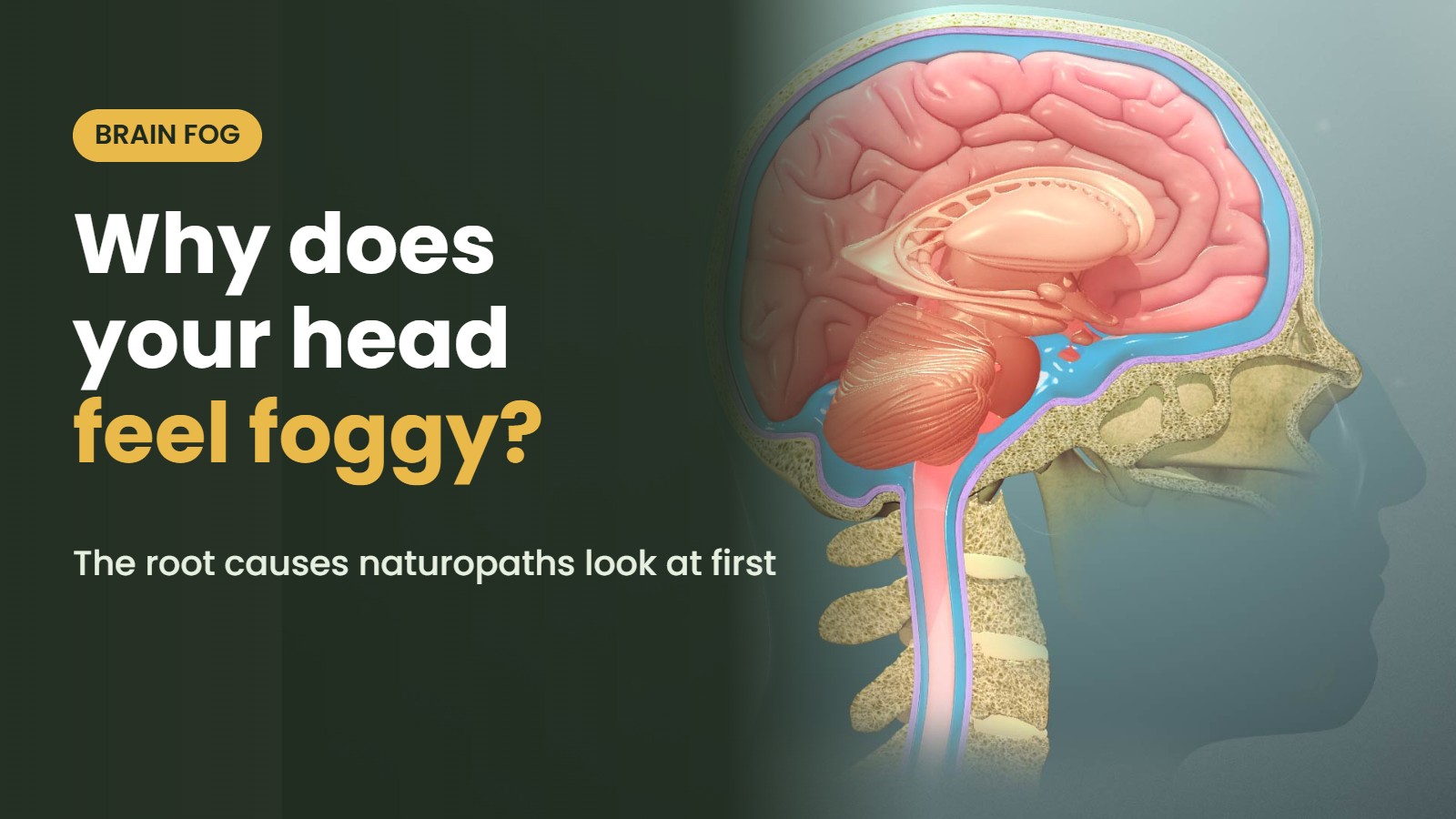
You walk into a room and forget why. You read the same paragraph three times. The word you want is right there, and then it isn’t. That heavy, cotton-wool feeling has a name: brain fog.
Brain fog isn’t a disease. Doctors don’t diagnose it on its own. It’s a signal that something upstream is off.
That’s why naturopaths don’t start with a pill. They start with questions. How are you sleeping? What did you eat today? How much water? What medicines are you on? Here’s the list they work through, the herbs with the longest history of use for a clearer head, and the signs that mean you should see a doctor instead.
Quick take
- Brain fog is a symptom, not a diagnosis. Sleep, blood sugar, water, low B12 or iron, thyroid and medicines are the usual suspects.
- Fix the basics first. Herbs like ginkgo, rosemary, gotu kola and rhodiola are traditionally used for focus, but the human evidence is mixed.
- Sudden confusion, trouble speaking or weakness on one side is an emergency. Call 911.
The usual suspects naturopaths check first

Think of brain fog like a check-engine light. The light isn’t the problem. These are the most common things behind it:
- Poor sleep. Short nights, broken sleep, or snoring and gasping (a sign of sleep apnea). Your brain does its clean-up work while you sleep.
- Blood sugar swings. A sugary breakfast, a spike, then a crash mid-morning. The foggy, can’t-think feeling often lands right on the crash. (More on that in Blood sugar swings: the foods and herbs traditionally used to steady them.)
- Not enough water. Even mild dehydration can make it harder to concentrate. Coffee all morning and no water is a common pattern.
- Low B12 or iron. Low B12 can show up as poor memory and confusion. People over 50, vegans and vegetarians, and people on metformin or acid reducers are more likely to run low, according to the NIH Office of Dietary Supplements.
- Thyroid. An underactive thyroid can bring tiredness, feeling cold and slow thinking.
- Medicines. Some sleep aids, allergy pills, pain medicines and others can dull your thinking. Ask your pharmacist.
- Stress, low mood and hormones. Constant stress, depression, and the menopause years all commonly bring fog with them.
- After an illness. Many people notice fog for weeks after a virus.
Naturopaths also look at inflammation and the gut, since what you eat every day affects how you feel. (See Inflammation and your spice rack.)
Fix the basics before anything else
This part isn’t exciting. It’s also where most of the change happens.
- Protect your sleep. Same bedtime, same wake time, a dark cool room, screens off for the last half hour.
- Eat protein at breakfast. Eggs, Greek yogurt, nuts. It tends to keep you steadier than toast and jam.
- Drink water before your coffee. A full glass when you wake up.
- Move. A brisk 10-minute walk is one of the quickest ways people clear their head.
- Take real breaks. Your focus runs in waves. Step away every 60 to 90 minutes.
No herb can out-work a short night, a sugar crash and an empty water glass.
Herbs traditionally used for a clearer head

Once the basics are in place, these are the plants with the longest history of use for memory and focus. Be realistic: the research is mixed, and none of them replaces sleep or medical care.
Ginkgo
Ginkgo has a long history in Chinese medicine, and the leaf extract is one of the most popular memory supplements in the world. The big picture is humbling, though. A large NIH-funded study of over 3,000 older adults found ginkgo didn’t lower the rate of dementia compared with a placebo. Some people still use it for focus. Skip it if you take blood thinners or are pregnant, since it may raise bleeding risk. Never eat raw ginkgo seeds.
Rosemary
“Rosemary for remembrance” goes back centuries in European folk tradition. Herbalists use it as a warming, stimulating herb, and small studies have looked at its scent and its effect on alertness. The easiest way in is the kitchen: cook with it or make a simple tea from a fresh sprig.
Gotu kola
In Ayurveda, gotu kola is a classic herb for the mind, traditionally used to support memory and calm focus. Modern research is still early. Avoid it if you have liver disease or are pregnant.
Rhodiola
Rhodiola is a cold-climate root used in Scandinavian and Russian traditions for stamina. Naturopaths use it to support focus when stress and fatigue are behind the fog. It can feel stimulating, so take it early in the day. Check first if you have bipolar disorder or take antidepressants.
Lion’s mane and green tea
Lion’s mane is an edible mushroom used in East Asian traditions and now being studied for memory and mood. Human trials so far are small. Green tea gives you a gentle mix of caffeine and L-theanine, which many people find smoother than coffee.
Amounts for all of these vary by product, so follow the label and check with your doctor first, especially if you take any regular medicine.
Food for a sharper mind

Traditional diets that are linked with healthy ageing have a lot in common. They lean on:
- Oily fish like salmon and sardines, for omega-3 fats.
- Berries and leafy greens, full of colourful plant compounds.
- Walnuts, eggs and beans, for steady energy and protein.
- Less sugar and fewer ultra-processed snacks, which feed the spike-and-crash cycle.
If you eat little or no animal food, ask your doctor about B12. It’s one of the simplest things to test.
Who should be careful
- Anyone on blood thinners, or with surgery coming up (ginkgo especially).
- People taking antidepressants, seizure medicine, diabetes medicine or several prescriptions.
- Anyone pregnant or breastfeeding.
- People with liver disease (gotu kola) or bipolar disorder (rhodiola).
When to see a doctor
- Call 911 for sudden confusion, trouble speaking, a drooping face, or weakness on one side. These can be signs of a stroke.
- Memory trouble that is getting worse over months, or that family and friends are worried about.
- Fog that started after a new medicine, a head injury or a fall.
- Fog with ongoing tiredness, low mood, weight changes or feeling cold all the time. Simple blood tests can check B12, iron and thyroid.
Also available: a memory and focus supplement
Some readers ask for a ready-made memory formula. This one is sold by an outside company. If you take any regular medicine, check with your doctor before trying it.
Sponsored link. If you buy through it, Clif may earn a commission at no extra cost to you. The claims on the seller’s page are theirs, not ours, and haven’t been checked by us. It’s not a substitute for seeing your doctor.
Try this today
Tomorrow morning, drink a full glass of water before your coffee and eat some protein with breakfast. Then notice how your head feels at 10:30. That one swap tells you a lot about what’s behind your fog.
Go deeper in the Vault
Vault members get the Memory & Focus hub: everything the Vault has on memory and focus in one place, with the “get medical help first” signs up top, plus the Brain Fog symptom page and Herbal Library profiles on ginkgo, gotu kola and rhodiola.
Educational only, not medical advice. This information has not been evaluated by the FDA or Health Canada and is not intended to diagnose, treat, cure, or prevent any disease. Talk to your healthcare provider before starting any remedy, supplement, or detox, especially if you are pregnant, nursing, taking medication, or managing a health condition. Read our full Medical Disclaimer.
Free remedies by email
Simple natural remedies and detox tips from Clif. Unsubscribe anytime.