It’s dark by five. The alarm goes off in the dark too. And somewhere between the clocks changing and the first real snow, a lot of people notice they just feel… heavier.
More sleep that doesn’t refresh you. A pull toward bread and sweets. Less interest in plans you’d normally enjoy. If that sounds familiar, you’re far from alone, and there’s a lot people do about it, starting with something free: light.
Quick take
- Short days can shift your body clock, and many people feel it in their mood, sleep and appetite from late fall to spring.
- Morning light (outdoors, or a 10,000 lux light box) is the first thing most people try, alongside vitamin D, movement and a steady wake-up time.
- Saffron, St. John’s wort and lemon balm are traditionally used for low mood, but St. John’s wort clashes with many medicines, so check first.
Why winter can feel so heavy
People usually arrive at this topic because of a pattern, not a single bad day. Some of the things they describe:
- Feeling flat or low most days once fall settles in, and better again by spring
- Sleeping longer but still dragging yourself out of bed
- Craving carbs and sweets, and gaining a few pounds over winter
- Pulling back from friends and plans
- Low energy and trouble focusing at work
- Feeling it more the farther north you live
For many people this is the milder “winter blues.” When it’s stronger, lasts two weeks or more at a time and comes back the same season year after year, the US National Institute of Mental Health (NIMH) calls it seasonal affective disorder, or SAD. NIMH notes it’s more common in women, usually starts in young adulthood and shows up more in northern places like Alaska and New England than in Florida, which makes it very familiar to Canadians too.
Your body clock runs on light

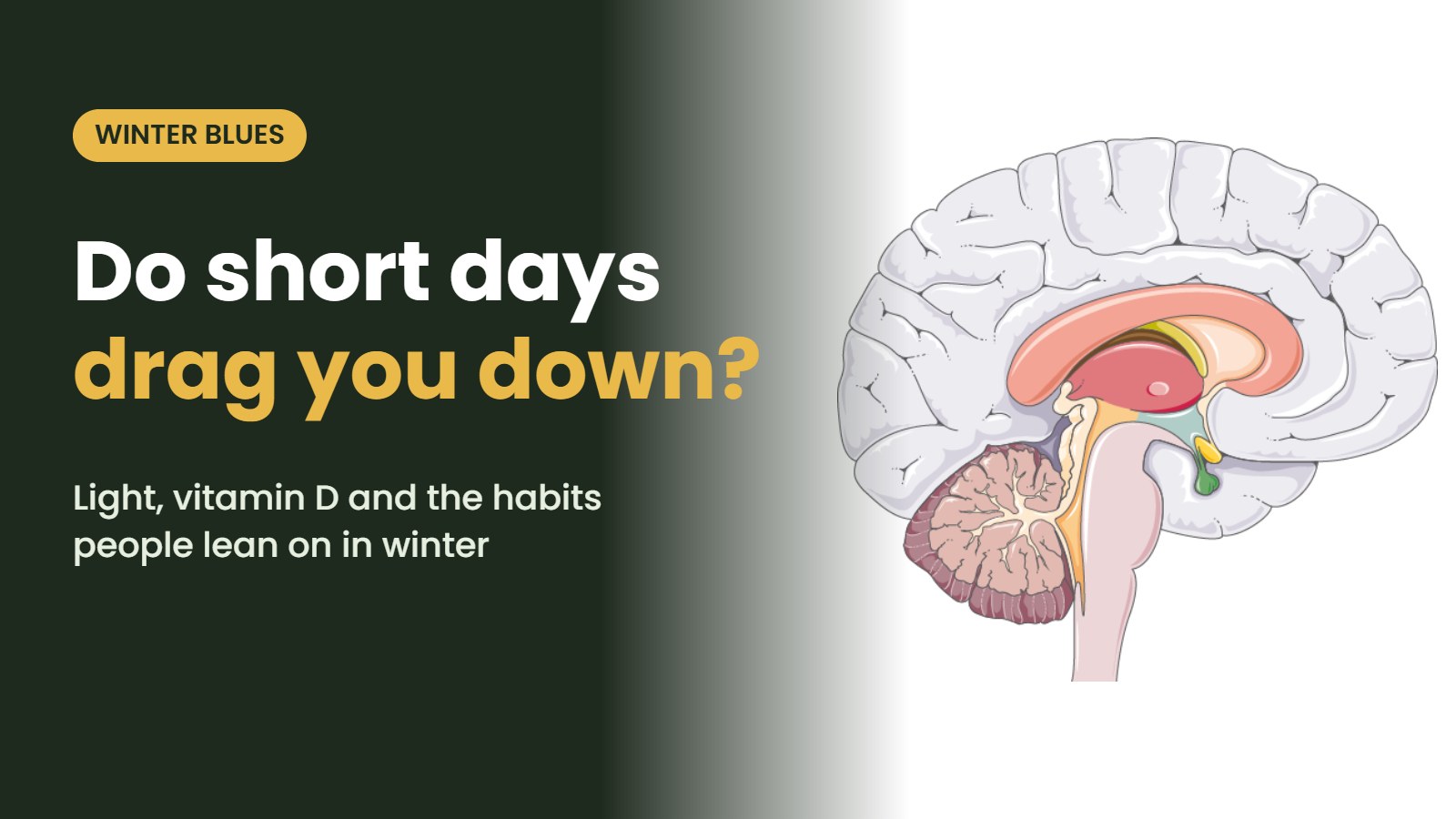
Light hitting your eyes in the morning is the main signal that sets your internal clock, a small control centre deep in the brain. That clock helps time melatonin (your “it’s night” hormone), body temperature, appetite and alertness.
When mornings stay dark, that timing can drift. Researchers are still working out the details. The leading ideas involve melatonin, serotonin, vitamin D and a body clock that’s out of step with your day. That’s why so many of the natural approaches people use come back to the same thing: getting more light, earlier.
Outdoor light first
Even an overcast winter morning outside is usually far brighter than a lit kitchen. Many people start with a 10–20 minute walk within an hour of waking, no sunglasses (never look at the sun).
Light boxes
Light therapy is one of the best-studied options for winter-pattern SAD. NIMH describes a 10,000 lux box (it filters out UV) used for about 30–45 minutes each morning from fall to spring; the National Center for Complementary and Integrative Health (NCCIH) gives a range of 20–60 minutes, and several studies found it worked about as well as medication or talk therapy. In Canada, the CANMAT guidelines also list bright light as a first-line option. Side effects can include headache, eye strain or feeling wired, and some people need to check with a doctor first (see below).
Vitamin D: the sunshine vitamin in a dark season

Your skin makes vitamin D from sunlight, and in much of the US and Canada the winter sun is too low to make much of it. People with seasonal low mood often have lower vitamin D levels, and that’s a big reason it’s popular in winter. NIMH sums up the research honestly: some studies found it helped, others didn’t. It’s still a good one to keep topped up for bones and general health.
Official amounts (US first): the NIH Office of Dietary Supplements sets 600 IU (15 mcg) a day for adults up to 70 and 800 IU (20 mcg) from 71, with an upper limit of 4,000 IU (100 mcg) a day from all sources unless your doctor advises more. Canada uses the same values, and Health Canada advises everyone over 50 to take a 400 IU supplement on top of food. Food sources include salmon, trout and other fatty fish, egg yolks, UV-exposed mushrooms and fortified milks.
More isn’t better: too much can cause nausea, weakness, confusion and kidney stones, and it nearly always comes from supplements. A simple blood test tells you where you stand. In the US, look for a USP or NSF seal on the bottle; in Canada, an 8-digit NPN.
Also available: Vitamin D3 + K2
If you want a winter vitamin D, the Vitamin D3 + K2 capsules we link to are sold by an outside company and pair D3 with vitamin K2. Check the label amount against the limits above. Skip it, or ask your doctor first, if you take warfarin or another blood thinner (vitamin K affects how it works), have kidney disease or high calcium, or are pregnant.
Sponsored link. If you buy through it, Clif may earn a commission at no extra cost to you. The claims on the seller’s page are theirs, not ours, and haven’t been checked by us. It’s not a substitute for seeing your doctor.
The cheapest winter mood tool there is might be ten minutes of morning light.
The herbs people reach for
US note: the FDA doesn’t approve herbal products or set doses for them, so there’s no US standard amount. Choose a product with a USP or NSF seal and follow its label. In Canada, look for an NPN; Health Canada’s monographs set the label amounts. Check with your doctor or pharmacist first, especially if you take any medicine.
Saffron
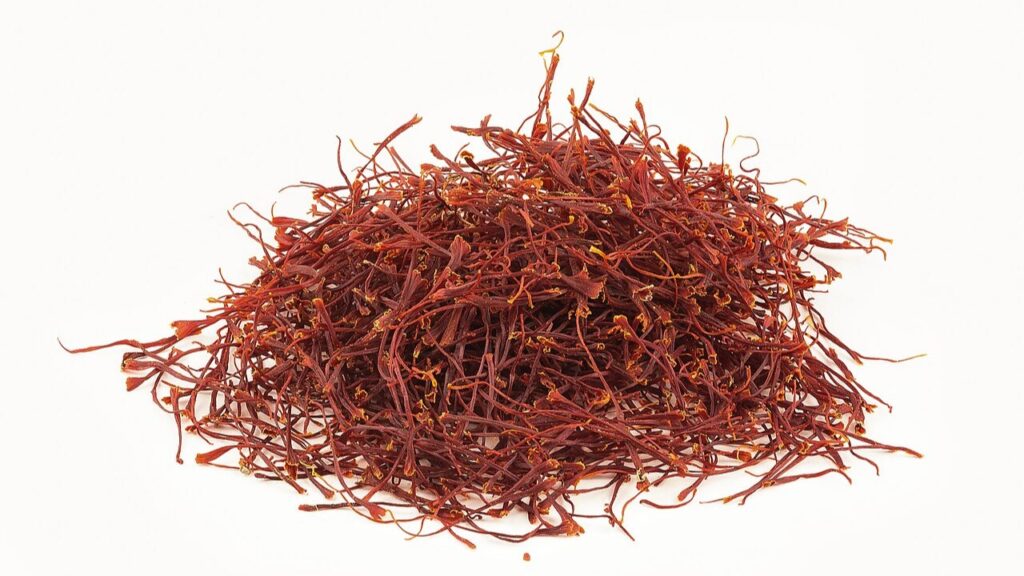
The world’s priciest spice has a long history in Persian and Ayurvedic tradition as a “cheering” herb. Several small trials, many from Iran, found saffron extract helped mild to moderate low mood more than a placebo; bigger, longer studies are still needed. Cooking amounts are safe. Large amounts are not, and high-dose saffron isn’t for pregnancy.
St. John’s wort
Traditionally used in Europe for low mood and nervous tension, and studied for depression for decades. For seasonal low mood specifically, NCCIH says the trials are small and unclear. The big catch: it changes how many medicines work, including birth control pills, antidepressants, blood thinners, heart and HIV drugs and transplant medicines. Never combine it with an antidepressant, and talk to a pharmacist before trying it.
Lemon balm and lavender
Gentler herbs people use for the restless, wound-up side of winter and for sleep. We covered them in our post on herbs for sleep.
The everyday habits that matter most
- Same wake-up time every day, weekends included, then light right away. It anchors the body clock.
- Move, ideally outside. The Physical Activity Guidelines for Americans call for 150 minutes a week plus two days of strength work; Canada’s 24-Hour Movement Guidelines say the same.
- Put plans on the calendar. Pulling away is part of the pattern, so book the coffee or the walk before you feel like it.
- Go easy on alcohol. The Dietary Guidelines for Americans simply say drink less; Canada’s Guidance on Alcohol and Health suggests 2 drinks a week or fewer.
- Feed the cravings smartly: fatty fish, beans, oats and colourful veg alongside the comfort food. Our seasonal immune post has more winter food ideas.
- Talk it through. A winter-focused version of CBT did about as well as light therapy in an NIMH-funded comparison, and its benefits lasted longer the next winter.
Who should go easy
- Bipolar disorder or a history of mania: light boxes and St. John’s wort can tip mood too far up. Doctor first.
- Eye conditions (retinal disease, recent eye surgery) or medicines that make you light-sensitive: check before using a light box.
- Any prescription medicine: ask a pharmacist before St. John’s wort or high-dose herbs.
- Blood thinners, kidney disease or high calcium: check before vitamin D and K2.
- Pregnant or breastfeeding: food amounts of saffron are fine; skip supplements unless your doctor agrees.
When to see a doctor
- Low mood most of the day, nearly every day, for two weeks or more
- It’s getting in the way of work, family or looking after yourself
- Sleeping or eating far more (or less) than usual, or big weight changes
- Thoughts of death or self-harm: call or text 988 (US and Canada) any time, or 911 in an emergency
It’s also worth ruling out things that look like winter blues, such as an underactive thyroid, low iron or B12 and poor sleep. Our brain fog post walks through those checks. NIMH notes that people with a history of SAD may do well starting their plan in early fall, before it hits.
Try this today
Set tomorrow’s alarm for the same time you’ll keep all week, and put your shoes by the door. Within an hour of waking, step outside for 10 minutes of daylight, even if it’s grey. Notice how you feel by lunch.
Go deeper in the Vault
Members get the Low Energy & Fatigue and Poor Sleep symptom guides, plus full Herbal Library profiles of saffron, St. John’s wort and lemon balm, with typical amounts, cautions and interactions. Explore the Vault.
Educational only, not medical advice. This information has not been evaluated by the FDA or Health Canada and is not intended to diagnose, treat, cure, or prevent any disease. Talk to your healthcare provider before starting any remedy, supplement, or detox, especially if you are pregnant, nursing, taking medication, or managing a health condition. Read our full Medical Disclaimer.
Free remedies by email
Simple natural remedies and detox tips from Clif. Unsubscribe anytime.